A good wedding canopy does three jobs at once: it frames the moment, protects your guests, and makes the logistics run smoother than they look. I have walked muddy fields at sunrise, measured patios that were an inch too tight, and watched couples exhale when the lighting flipped on and the whole tent glowed like a lantern. Done well, a canopy feels like architecture and hospitality in one move.
If you are searching phrases like party rental tents near me or tent and chair rental and feel overwhelmed by choices, that is normal. The right decision usually comes from a mix of style, site conditions, guest count, and the realities of setup. Here is how to navigate it, with hard numbers, trade-offs, and the little details that decide whether everything feels effortless or improvised.
Start with the vision, not the model number
Before brand names and square footage, picture the event the way you want it to feel. Airy and coastal with sailcloth peaks and soft shadows. Crisp and modern with a clear top that showcases the skyline. Wooded and twinkling under bistro lights. If you start from that sensory picture, you will be able to filter options quickly and you will give your rental partner a clear target.
A recent couple wanted their grandmother to see the first dance without leaving her cane and also wanted a view of the lake. That decision steered us toward a frame tent on a slightly elevated deck, with a lower eave height along one side to avoid tree branches and a 16 by 16 dance floor placed so she could sit on the perimeter but still feel in the middle of the celebration. The choice of tent grew out of the experience they wanted.
Canopy types and where they shine
Most wedding canopy rental options fall into a handful of families. Each has strengths, quirks, and site needs.
Pole tents rely on tension through perimeter stakes and center poles. They create that romantic swoop, especially in sailcloth versions, and they are efficient for large footprints like 40 by 80 or 60 by 100. They like grass or soil because stakes need bite. Wind performance is excellent when properly tensioned, but center poles interrupt sightlines and the staking footprint can be 5 to 8 feet beyond the tent’s edge. If you want long communal tables and do not mind planning around a few poles, the value is tough to beat.
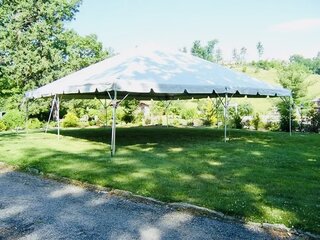
Frame tents use an aluminum skeleton that holds the fabric without center poles. They can be ballasted with concrete or water barrels, so they work on pavement, decks, or rooftops. They scale nicely from intimate 10 by 20 canopies to sprawling 40 by 60 frames with clear or solid tops. Because there are no center poles, you gain flexibility for stage placement and dance floors. The look is cleaner, and interior draping or liners can warm it up.
Clear-top tents, which are often a variant of frame tents, make the sky part of your decor. Golden hour under a clear top is unforgettable. Direct sun, however, can turn them into greenhouses from noon to 3 p.m. In summer. You either commit to a later ceremony and reception, add shade sails during the day, or install climate control. On cool spring and fall nights, clear tops create magic without the heat penalty.
Stretch tents or Bedouin-style tents conform to uneven terrain and create sculptural lines. They need expert rigging and premium outdoor tent rentals careful wind planning, but for organic sites and boutique guest counts they deliver drama you cannot get from standard rectangles.
Sailcloth tents, technically a type of pole tent, deserve their own mention. The light through the fabric is soft and flattering. If you are near water or in an open meadow, sailcloth peaks at 20 or 30 feet can read as airy rather than imposing. Again, they need staking space and a forgiving surface.
For smaller gatherings like tent rentals for birthday parties, compact frame tents or pop-up canopies solve shade and weather without a full production. Party tents for rent in the 20 by 20 range can host 32 to 40 seated guests for a backyard celebration or serve as a cocktail annex for the main wedding.
How to calculate the size you really need
Capacity charts are a starting point, not the law. The final number depends on your layout, whether you are doing family-style service, and how much open space you want. Here are practical benchmarks that work in the field.
For seated dining with round tables, plan 10 to 12 square feet per guest. A 60 inch round typically seats eight and uses about 100 square feet including circulation. If you prefer 72 inch rounds for ten guests, add a little more space to keep servers moving.
For long banquet tables, 8 to 10 square feet per guest is common because tables align efficiently. Leave six feet clear for aisles that staff use frequently. If catering staff will tray-pass hot plates in narrow aisles, that extra foot saves spills.
Cocktail-style receptions with scattered hightops can work at 6 to 8 square feet per guest indoors, but tented events need a bit of breathing room. Plan 8 to 10 square feet for smoother flow, especially if you have a bar with a line.
Dance floor rentals follow a simple rule: 30 to 40 percent of guests dance at once. Allow 4 to 5 square feet per active dancer. For 150 guests, a 15 by 18 floor (270 square feet) is comfortable, while 18 by 18 (324 square feet) gives elbow room and works well if you are bringing a band.
A stage for a 5 to 7 piece band ranges from 12 by 16 to 16 by 24 depending on instruments. DJs are leaner - an 8 by 12 platform often suffices. Add six feet behind for cables and cases.
Head tables and sweetheart setups ripple through the math. A head table for ten requires at least 4 by 20 feet, plus space to step out gracefully. Sweetheart tables save space and make photography simpler.
Ceremony canopies need fewer square feet per guest than dining because chairs pack tighter - roughly 6 to 7 square feet per person. A 20 by 40 can seat about 120 for a ceremony, though sightlines and columns in pole tents can influence chair mapping.
Do not forget the service partners who make the event move. A catering prep tent of 20 by 20 or 20 by 30 with lighting, sidewalls, and flooring is standard if the main canopy is more than a short walk from a kitchen. If your wedding is on a private property, a power plan is non-negotiable - 1 to 2 dedicated 20-amp circuits for lighting and DJ, and separate power or a quiet generator for catering.
Site realities that decide the product
I have stood with couples in backyards they adored, only to realize the maple roots made staking a hazard and the slope would turn chair legs into stilts. An honest site visit with your tent event rental company beats any lookbook.
The ground type sets the anchoring plan. Grass welcomes stakes. Asphalt can sometimes be drilled and patched with permission. Concrete and rooftops require ballast - think water barrels or concrete blocks. Ballast will add delivery time and cost, and you need flat spots to place weights safely.
Access drives the labor plan. If a 60 by 100 sailcloth tent is crossing a footbridge, crew hours go up and the install day stretches. Ask how close trucks can park and whether a small forklift is permitted. Ten extra minutes of walking each way multiplied by 200 trips is real money.
Underground utilities are invisible until they are not. In many regions, you or the vendor must call 811 or the local equivalent a week in advance so the utility company can mark lines. No tent is worth a gas leak.
Permits and inspections vary by municipality. Some towns require fire-retardant certificates for the fabric, exit signage, and fire extinguishers if the canopy exceeds a certain size or uses sidewalls. Others have decibel limits after 10 p.m. Your rental partner should know the pattern in your area, but you are the permit holder on private land more often than not. Build a week of margin into the calendar so paperwork does not force a last-minute downgrade.
Trees, fences, and decks help or hinder. Measure everything twice. A 40 by 60 frame tent might fit an area that is technically 42 by 62, but not if a deck stair intrudes three feet on one side. Vendors prefer to stake or ballast at least three feet off foundations and retaining walls.
Weatherproofing without losing the look
A wedding canopy is a weather plan with personality. You can protect your vibe, even when the forecast moves.
Rain needs two things: floors and edges. Flooring does not have to be a full cassette system. On mild slopes, interlocking plastic tiles leveled with shims keep heels and chair legs off the damp. Along tent perimeters, guttering between tent bays and drip edges over entrances prevent the ankle-deep surprise that comes when runoff pools exactly where guests step in.
Wind respect increases with square footage. Ask for ballasting plans and wind ratings. Many reputable vendors pause or evacuate at sustained winds above 35 to 40 mph depending on structure and local code. That is not fear - it is professionalism. If your site is a ridge or beach, orient entrances away from prevailing winds and add protected vestibules for sidewalls so they do not sail when opened.
Sun matters more than people think. Even solid-top tents act like shade trees that warm up in the afternoon. If your event starts at 2 p.m. In July, add fans and consider tent liners that soften heat. Clear tops reward evening schedules. If you must be under one early in the day, add a mesh overlay or some strategic drape to break direct rays.
Temperature control comes in flavors. Propane tent heaters with ducting and diffusers keep corners cozy in spring and fall. They need ventilation and safe clearance from fabrics. For heat waves, evaporative coolers help in arid climates. In humid regions, spot coolers or full HVAC are better, but they require power and careful ducting so you do not trip guests. When you search chair and tent rentals near me, look for companies that also understand climate gear, so one team owns the integration.
Flooring, subfloors, and dance surfaces
Your shoes and your aunt’s walker both care about the ground. The difference between an average event and a polished one often lives underfoot.
Leveling is about dignity. If you have a beautiful hillside view, expect a platform or partial subfloor to make tables plumb and glassware steady. Platform systems can correct 12 to 36 inches of grade with bracing. It is not a small cost, but it transforms a pretty site into a performant site.
Dance floor rentals come in styles: maple-look parquet, white acrylic, black, checkered, or rustic plank. DJs usually prefer smooth surfaces so stands sit flat and cables tape cleanly. A 16 by 16 works well for 120 guests, and an 18 by 18 feels luxurious for the same crowd. If you plan two dance sets with a band, the larger floor keeps the energy from feeling cramped once dessert hits.
Consider thresholds. Where tent flooring meets grass, add aluminum ramps or wood transitions so nobody trips. Tape edges do not cut it when guests wear open-toe heels or sharper dress shoes.
Lighting and the mood after sunset
The day softens when lights kick in, and most tents benefit from layers of illumination. A gentle baseline, focal accents, and a practical plan for service zones work in combination.
Cafe or bistro lights strung in classic V or zigzag patterns provide warm ambient glow. Keep spans under manufacturer recommendations for safety and brightness. Edison bulbs read vintage, small globes read festive. Dimming them during toasts and bumping them for dinner service creates rhythm without fuss.
Chandeliers, lantern clusters, or rattan fixtures bring character. Hang them over the dance floor or head table. Link weight to structural points the rental crew approves - never improvise rigging to poles or fabric.
Uplights along sidewalls or on perimeter posts draw the eye upward. If you have a sailcloth, the light catches the weave and makes the whole canopy feel like a tented cathedral. In clear tops, fairy lights above greenscapes turn the roof into a starfield even if clouds hide the sky.
Do not forget functional light. Bars need task lighting bright enough for staff to read labels. Catering tents require bright, safe work light and weatherproof cords. Mark exit paths in case a sidewall is closed for wind or rain.
The furniture equation: chairs, tables, bars, and beyond
You can rent tables and chairs near me and call it done, or you can build a layout that supports how people actually use the space.
Banquet tables save space and feed conversation, but they need room for platters and decor if you go family-style. Farm tables, heavier and wider, look great under sailcloth peaks. If you rent through a tent for wedding rental provider that also carries tables, coordinate delivery loads so heavy items arrive when flooring is ready.
Chair choice is not just aesthetic. Chiavari chairs read formal and photograph beautifully. Cross-back chairs lean rustic and feel sturdy. If the ceremony is long, padded seats make a difference, especially for older guests. Ask your tent and chair rental company to confirm seat counts match your final floor plan, with at least a 5 percent cushion for last-minute adds.
Bars become a bottleneck if underbuilt. For 150 guests, two 6 to 8 foot bars with mirrored back bars keep lines manageable. Outdoor tent for party rental setups often forget ice and waste stations - plan them, and plan the crew to manage them.
Lounge areas spark cross-generational mixing. Place one cluster near the dance floor and one near the bar. On a cool night, add a heater between them and a basket of throws. The flow softens and people linger longer.
Installation timing and the day-of ballet
Great installs feel unhurried. That is by design. A 40 by 60 frame tent might arrive the morning before your event, with lighting and sidewalls to follow. Larger builds, 60 by 100 or multi-tent compounds, do better with a two-day window. When you are pricing party rental tents near me, ask not only what it costs, but when it lands.
Coordinate with landscapers and florists. Freshly mowed lawns are great unless grass clippings blow onto a white floor. Floral teams need access after lighting is in but before tables are set. If you have an arbor delivery, confirm truck clearance and turning radius.
Noise ordinances matter in more than one direction. If the site restricts early morning work, a sunrise install is off the table. If teardown cannot happen the night of, confirm overnight security and next-day timing. For chair and tent rentals near me searches, look for companies that talk proactively about this. It is a sign they have run into problems and learned from them.
Budgeting without guessing
Tent packages often look similar until you read the line items. The cheapest bid is not always the least expensive outcome.
Look for clarity on the structure type, size, sidewalls, lighting type and quantity, dance floor size, delivery and pickup windows, labor, permits, and damage waiver or insurance. Ask what anchoring method is included and what happens if the site needs ballast. If you are on a rooftop or tight patio, ballast can add 10 to 25 percent.
Factor in the service tents. A 20 by 20 catering tent with basic lights and sidewalls is typically a modest addition. Portable restrooms, power distribution, and heaters or fans change the number meaningfully. Quiet generators cost more but keep your toasts audible and your video clean.
When comparing vendors from searches like tent event rental or party tents for rent, prioritize responsiveness. The team that answers questions specifically is the team that will troubleshoot at 4 p.m. When a sidewall zipper sticks just as a squall line shows up on radar.
Safety and compliance are not optional
Ask for flame-retardant certificates for tent fabric and liners, as many jurisdictions will spot-check larger events. Fire extinguishers at marked exits are a small cost with big peace of mind. Weighted thresholds on sidewalls prevent flapping, and proper cable management under carpets avoids trips. If your bar uses propane for specialty drinks or your caterer has open flame, confirm separation from tent fabric and proper fire blankets.
Do not DIY rigging on tents. Every extra twinkle light or hanging installation adds weight. The crew will tell you what the structure can handle. Respect their limits, and they will keep you safe and on schedule.
Vendor coordination that pays off
Your photographer wants clean backgrounds and even light. Your band wants power stability and a stage that does not bounce. Your caterer wants a prep area that is dry, lit, and close. A short roundtable call two weeks out with your wedding canopy rental provider, planner, caterer, and entertainment flattens problems while they are still theoretical.
If you are handling rentals yourself, try to centralize with a vendor who can bundle tent and chair rental, lighting, dance floor rentals, and service tents. It simplifies timelines and puts accountability in one place. If you must split vendors, assign one person the job of confirming all load-ins and power draw on a single site map.
A compact checklist you can actually use
- Confirm style and structure: pole, frame, sailcloth, clear-top, and why it fits your site and vision. Map the layout: guest count, table style, dance floor size, stage, bar, and service tents. Verify anchoring and access: staking space, ballast needs, truck path, and delivery windows. Lock the weather plan: sidewalls, heaters or fans, flooring, gutters, and lighting layers. Get the paperwork right: permits, fire safety, utility locates, insurance, and vendor certificates.
Print that list, and walk your venue with it. If any line feels tentative, call your vendor before deposits finalize.
Smart questions to ask your rental partner
- What are the wind ratings and evacuation thresholds for this specific structure, and how will you secure it on my site? How much working space beyond the tent footprint do you need for stakes or ballast, and can you mark those zones on a site map? If rain is likely, how do you handle flooring transitions, tent gutters, and sidewall entrances so guests stay dry? Can you provide a power plan with total amp draw for lighting, band or DJ, and catering, and identify which circuits they land on? What is the install and strike timeline, and how do after-hours or Sunday pickups affect the quote?
Good vendors answer clearly and in writing. Great vendors volunteer details you did not think to ask.
Real-world scenarios and solutions
A mountain meadow with a six-degree slope looks flat to the eye and feels like a ship’s deck under tables. The fix was a hybrid: a 30 by 60 frame tent on a leveled subfloor for dining and a 20 by 30 sailcloth lounge on graded ground. The sailcloth gave romance, the frame gave stability, and guests moved between them all night.
A city courtyard limited stakes because irrigation lines spidered below the pavers. We used a 40 by 60 clear-top frame tent, ballasted with concrete blocks dressed in greenery boxes. Delivery required a smaller truck and extra crew hours due to a narrow service alley. The client approved the added labor ahead of time, and the blocks doubled as plant stands that looked intentional, not industrial.
A lakeside property with afternoon sun demanded shade without closing the view. A sailcloth tent, eave height set at eight feet on the lake side to cut glare and ten feet on the lawn side for airflow, struck the balance. We installed soft voile drape panels at the west corners that could be tied back or let down depending on the sun. Guests never noticed the micro-adjustments, they just felt comfortable.
When smaller is smarter
Not every wedding needs a massive footprint. For guest counts under 80, a 30 by 45 sailcloth or a 30 by 40 frame tent can feel intimate and cost-effective. If you split ceremony and reception, a 20 by 40 canopy for ceremony and a 30 by 40 for dinner allow quick flips and shorter chair moves. For casual gatherings or rehearsal dinners, outdoor tent for party rental packages that pair a 20 by 20 with lighting, basic sides, and a compact dance floor keep budgets reasonable while setting a clear anchor for the night.
If you are scouting chair and tent rentals near me for a backyard celebration, ask about weekday rates. Some vendors discount installs on Tuesdays and Wednesdays, which can be helpful for welcome parties or post-wedding brunches.
Contracts, deposits, and the fine print that matters
Read cancellation and weather clauses. In most regions, tents are held with a deposit and final counts lock a week or two out. If you are holding a rain-backup structure for an indoor venue, ask about reduced fees if the backup is released by a certain date. Damage waivers cover wear and tear, not negligence. If a guest drags a firepit under a sidewall, you will want clarity on who pays for repairs.
Confirm that the proposal lists the exact model or series of the tent, not just a size. A premium sailcloth from one maker is not the same as a vinyl pole tent in the same dimensions. The look, light quality, and even how the fabric behaves in wind vary.
Sourcing the right partner locally
Searching party rental tents near me or tent for wedding rental will return a mix of full-service companies and niche specialists. Portfolios tell stories - look for projects on sites like yours. If your event is on a farm, choose a team that shows fields and gravel drives in their photos. If it is on a museum terrace, look for tight urban installs and clean ballast plans.
I like to ask two extra questions in first calls. What event from last season are you proudest of, and why? What went wrong at one event, and what did you change afterward? You learn quickly whether a vendor is reflective and invested.
The payoffs of a thoughtful canopy plan
A tent is not just a roof. It is the room where your people will toast you, laugh at half-polished speeches, and dance with abandon. When style, size, and setup work together, guests forget the machinery. They notice how the sunset volleys through sailcloth, how they never had to step around a cable, how the bar line moved, how grandma smiled at the first dance.
If you bring your vision, invite your vendors into real constraints, and use the checklist and questions above, you will end up with more than a rented structure. You will build a place that belongs to your day, even if it stands for only twelve hours. And that is the quiet secret of great tented weddings - they are temporary, yet they feel made for you.